

Hi! It’s konkaz (@konkazuk).
As we enter the final stretch of 2025, climate-driven disasters around the world have become too severe to ignore.
At the same time, we continue to see governments closely aligned with ultra-rich elites who still deny climate change and pursue their own greed—an increasingly disturbing reality.
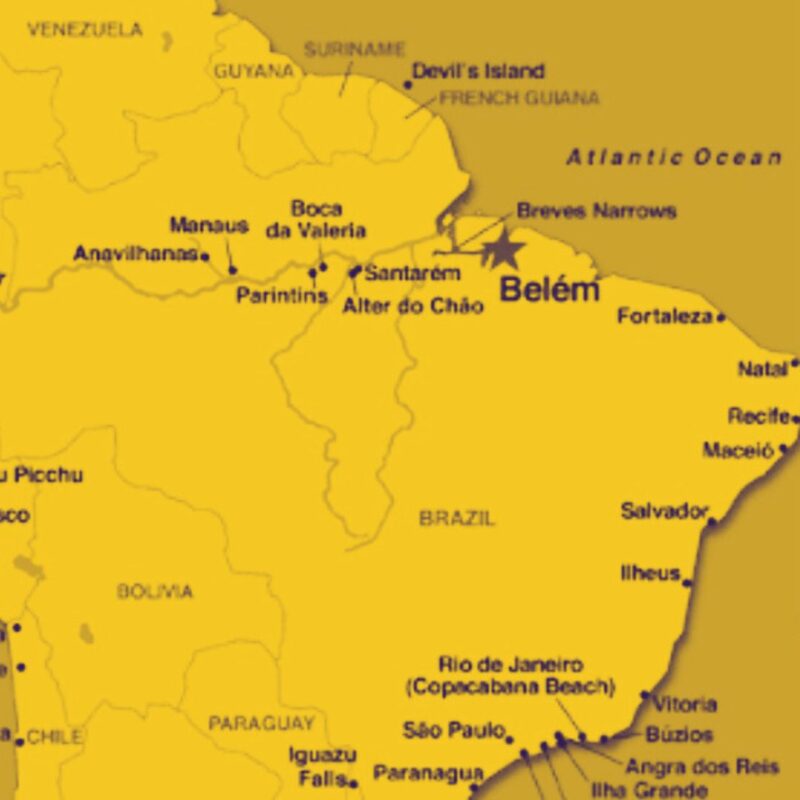
Amid all this turmoil, COP30 — the United Nations Climate Conference — was held in Belém, a city in northern Brazil.
This was the year when countries were required to submit updated NDCs (Nationally Determined Contributions), as agreed under the Paris Agreement and scheduled for revision every five years. So, what actually happened?
Here are the key points as I see them.
Behind the scenes of climate summits
Right from the start, COP30 smelled fishy, and although I hadn’t expected much, the outcome still felt like a letdown.
🔹Lifting the moratorium
Brazil is the world’s largest exporter of soybeans, and most of them are used as feed for the livestock we consume — cattle, pigs, chickens, and so on. But the expansion of farmland to grow this animal feed has long been one of the biggest threats to the Amazon rainforest.
In response to this issue, the companies involved adopted the Soy Moratorium in 2006, pledging not to purchase soy produced on land cleared from the Amazon rainforest.
This arrangement has long been praised around the world as a rare “success story” in protecting the Amazon.
However…
Just three months before COP30 kicked off, something shocking happened: Cade, Brazil’s antitrust watchdog, pressured grain-trading companies into abandoning the Soy Moratorium.
As a result, an area roughly the size of Portugal could once again be exposed to destruction from agricultural expansion.
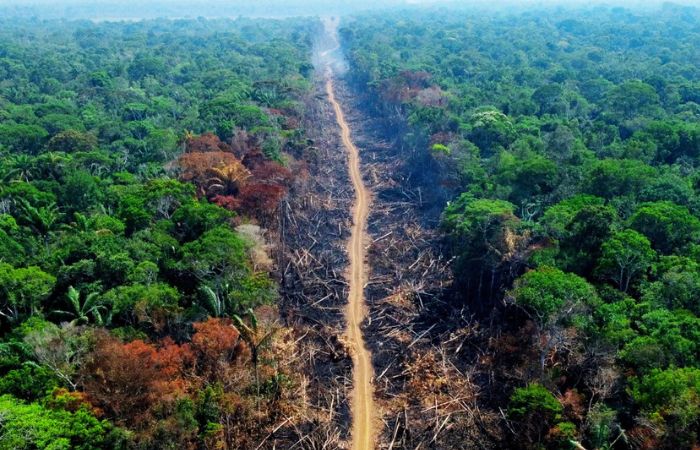
🔹Building a highway at the cost of the rainforest
Ahead of COP30, the Brazilian government pushed through an eight-mile (13+ km) highway right across the rainforest to reach Belém, despite opposition from local communities and environmental groups.
This action directly contradicts the very purpose of the COP30 summit, which is supposed to address the climate crisis.
🔹One in 25 delegates was a fossil fuel lobbyist
It’s honestly unbelievable.
According to a report by Kick Big Polluters Out, more than 1,600 fossil-fuel lobbyists were allowed to take part in the COP30 negotiations—far outnumbering the delegations of every country except the host nation, Brazil.
Just to grasp how massive that number is…
▪️50 times the size of the delegation from the Philippines, a country hit by more than twenty typhoons this year.
▪️44 times the size of Iran’s delegation, despite the government considering evacuating the capital because of extreme drought.
▪️40 times the size of Jamaica’s delegation, even as the country faces hurricane damage requiring billions in reconstruction.
It has, quite literally, become a platform where polluting corporations come to demand profits!
The difficulty of international cooperation on NDCs
As I mentioned in the introduction, one of the major expectations for this COP was that countries would submit updated NDCs in line with the pledge to keep global warming to 1.5°C above pre-industrial levels.
…but many countries failed to meet the deadline, and over 70 nations — including India and Saudi Arabia — did not submit their updated NDCs on time.
Even among the NDCs that were submitted, most did very little to meaningfully reduce emissions.
And scientists warn that..
emissions must peak and start falling by 2026, with annual cuts of more than 5 percent after that — otherwise, we simply won’t make it.

When you add up all the national NDCs, the planet is currently on track for about 2.5°C of warming — far off from the 1.5°C target.
Countries like China, India, and Russia pushed back against any conversation about making their NDCs more ambitious.
At the end of the day, every country prioritises its own economic growth, which means fossil-fuel interests end up outweighing the planet’s climate safety.
It seems that COP30 made it very clear just how wide the gap is between what science says and what politicians are actually doing.
Issues that were overlooked

Regarding the crucial issue of transitioning away from fossil fuels, over 80 countries proposed starting discussions on roadmaps to meet their targets. However, opposition from Saudi Arabia, Russia, and several Arab states forced the discussions to be scaled back to voluntary commitments.
As a result, they couldn’t introduce any enforceable emission-cutting rules.
In terms of social equity, there was a bit of a step forward, with the idea of a “Just Transition”, which addresses how to help workers affected by the transition from fossil fuels to clean energy, being officially recognised.
Meanwhile, serious human-rights issues tied to mining key minerals were taken out because China and Russia opposed them, so the “hidden problems” behind the clean-energy shift weren’t tackled.
It was the kind of COP where you could almost hear the voice of the money-obsessed leaders saying…
“We don’t give a damn about the planet or the next generation. As long as we can keep having fun until we grow old and die, that’s all that matters.”
… Is everyone happy with this?
konkaz
*You can read this blog post in Japanese from the link below.
👉 COP30の”裏切り”! 約70ヵ国がNDC未提出、その先にある地球の危機