
Hi! It’s konkaz (@konkazuk).
When reading articles about climate change, you often come across mysterious acronyms made up of nothing more than a string of capital letters. And there is one abbreviation that has been popping up everywhere lately: AMOC.
Since it’s often shown alongside illustrations of ocean currents, I always assumed it had something to do with the sea. But every time I considered looking it up, I got the feeling I was about to open the door to a rather complicated topic, so I kept putting it off.
As it turns out, though, AMOC is one of the most important concepts for understanding climate change.
So, in this article, let’s take a closer look at what AMOC actually is.
What is AMOC?
First of all, AMOC ( pronounced “AY-mock” ) stands for Atlantic Meridional Overturning Circulation.
Breaking the name down:
Atlantic = the Atlantic Ocean
Meridional = running from north to south
Overturning = water moving between the surface and the deep ocean
Circulation = circulation
Simply put,
AMOC is a huge ocean circulation system that moves water from north to south and south to north across the Atlantic Ocean.
The word “meridional” comes from a geographical concept. It describes a vertical plane that passes through the Earth’s axis, including the line connecting the North and South Poles.
Warm seawater is lighter, so it flows along the surface of the ocean. On the other hand, seawater cooled in the northern ocean becomes saltier as sea ice forms, making it denser and causing it to sink into the deep ocean.
In other words, when we look at the Atlantic Ocean from a north–south cross-section,
AMOC works like a giant conveyor belt: it carries warm water northward, where it cools and sinks into the deep ocean, while colder water flows back south.
What does AMOC do?
To understand why AMOC is so important, we first need to understand that …
ocean currents are much more than just moving seawater — they play a vital role in transporting heat around the planet.
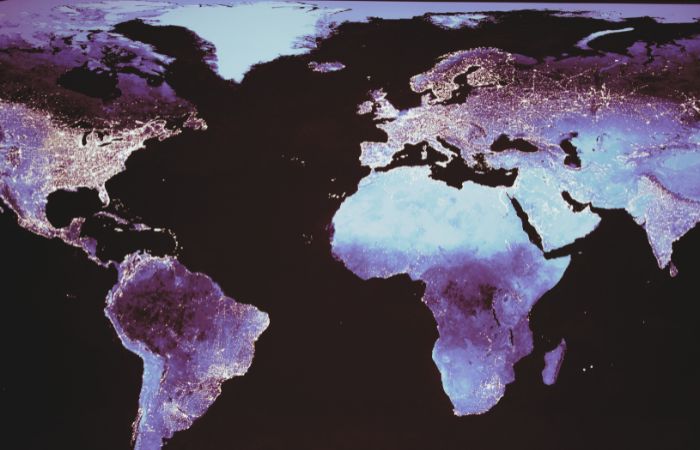
The Sun does not heat the Earth evenly. As a result, regions near the equator are much warmer, while areas closer to the North and South Poles remain much colder.
One of the systems that helps balance this difference is the AMOC.
Think of the AMOC as a giant heat transport system. Through currents such as the Gulf Stream, it carries warm water north and sends cold, deep water back south.
Thanks to this, Europe has relatively mild winters compared with eastern Canada, even though they are located at similar latitudes.
The influence of the AMOC is not limited to Europe.
Because the oceans constantly exchange heat and moisture with the atmosphere, changes in the AMOC can affect climates around the world, altering rainfall patterns, sea surface temperatures, marine ecosystems, and even fisheries. As a result, they could also have a wide range of impacts on our daily lives.
Why is AMOC receiving so much attention now?
So, why has AMOC been receiving so much attention around the world in recent years?
The reason is that scientists believe climate change could weaken this important ocean circulation system.
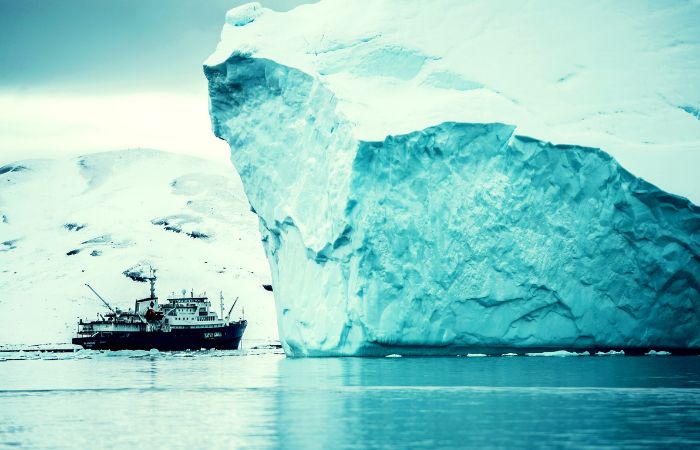
AMOC works because seawater in the North Atlantic cools, becomes denser, and sinks into the deep ocean. However, as the climate warms, large amounts of ice melt from Greenland, and the meltwater flows into the North Atlantic.
Because this water contains very little salt, it reduces the salinity of the seawater, making it less dense than before. As a result, the water that would normally sink into the deep ocean does not sink as easily, leading scientists to believe that the AMOC’s “conveyor belt” could weaken.
Scientists have not concluded that the AMOC will shut down in the near future. However, many studies suggest that it may already be weakening, and researchers around the world are actively investigating the risk that it could weaken even further in the years ahead.
What happens if AMOC weakens?
So, what would happen if the AMOC became even weaker? How might it affect our daily lives?
If the AMOC weakens significantly, winters in Europe could become colder than they are today.
For example, one scenario from the UK Met Office suggests that the UK’s average temperature could fall by around 5–6°C. On the other hand, summers would not simply become cooler. In some regions, rainfall could decrease, increasing the risk of drought.
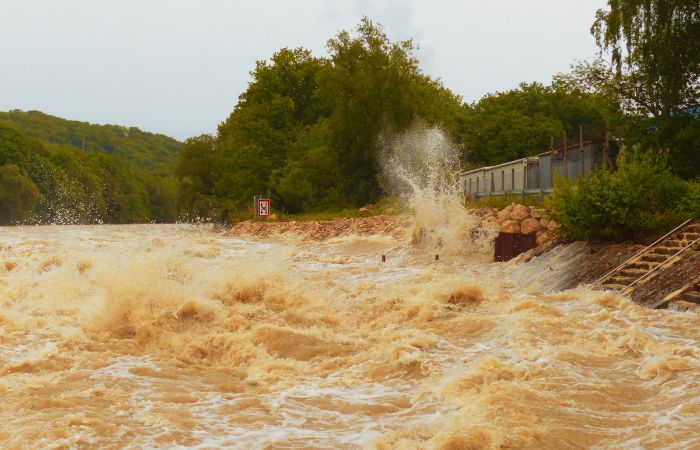
Since the AMOC is closely linked to the Earth’s climate system, changes in its strength could alter rainfall patterns around the world and increase the risk of extreme weather events, including heavy rainfall and droughts.
Such changes could also affect agriculture and fisheries, with impacts that may eventually extend to food supplies and our daily lives.
Of course, this does not mean that all of these changes will happen in the immediate future. However, the AMOC is a vital system that helps regulate the Earth’s climate, and it is precisely because changes to this system could have global impacts that researchers around the world are paying close attention.
And that brings us to the end of this article. The next time you come across the term “AMOC” in the news, I hope you will remember: “Ah, that’s the giant ocean circulation system in the Atlantic.”
Until next time,
konkaz
*You can read this blog post in Japanese from the link below.
👉 AMOCとは?地球の気候を支える巨大な海のベルトコンベア