

Hi! It’s konkaz (@konkazuk).
Recently, I dropped by a Q&A event in Dalston organised by the Green Party for leaseholders facing various problems.
I’d heard the term leaseholder before, but if I’m being honest, I didn’t fully understand it until I attended the event.
(I’d always assumed that anyone paying rent for a flat was a leaseholder.)
So this article is a chance to understand what’s happening in my local area, as well as a report on an event I attended partly to educate myself, despite the fact that I turned up pretending I knew more than I actually did.
What is a leaseholder?

To begin with, because it is common in Japan to own both the land and the building outright, the idea of leasehold is not something many people are familiar with.
In the UK, by contrast, it’s perfectly normal for flats to be leasehold, and for native speakers this is more or less common knowledge. So I initially assumed that because I rent a flat and pay rent, I must be a leaseholder as well.
That assumption, however, turned out to be completely wrong.
Unlike tenants like me who renew their contracts annually, a leaseholder is…
someone who has purchased a flat but does not fully own it. They hold long-term rights, often for 99, 125, or even 999 years, while a separate freeholder owns the land and the building itself.
Therefore, while people known as leaseholders may appear to own their homes, in reality they must continue to pay ground rent and service charges to the freeholder.
The reality of leaseholders revealed at a Dalston Q&A
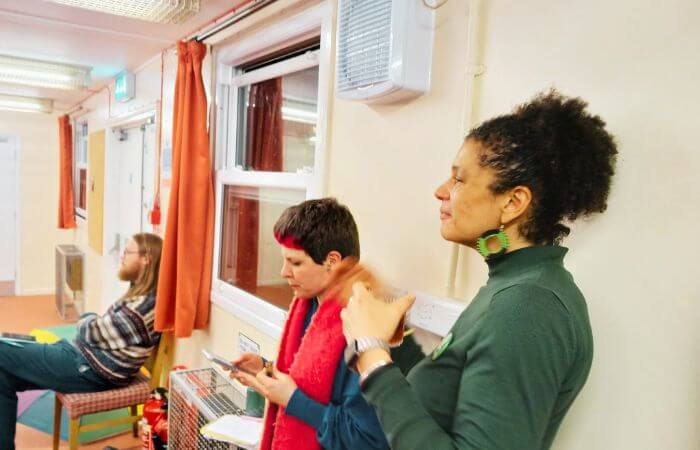
By the time I arrived at the Hackney Community Centre in Dalston, the usual faces from the Green Party were in the middle of setting up. Antoinette, who was hosting the event, was in conversation with the professionals who would later be answering questions from the audience.
In no time at all, people poured in and the venue was suddenly packed. And just like that, the event kicked off.
The first speaker was Amber, who had managed to navigate a difficult situation: despite the front door of her leased flat being left broken for a whole year, her service charges had doubled over two years, leaving her worried that she might not be able to find a buyer when she eventually moves out.
She shared her know-how based on her experience of taking over the management rights from the freeholder by using the Right to Manage.
Next up was Ian from Anthony Gold Solicitors.
He also explained another option called “Collective Enfranchisement,” where leaseholders come together to purchase the freehold. This is at the same valuation level as the Right to Manage from the freeholder, but it’s very powerful since it gives them complete control over the property.
He also spoke about the new “Leasehold and Freehold Reform Act 2024”, which is still under consideration, explaining that the government might strengthen lease extension rights in the future and highlighting key points to keep in mind when taking service charge disputes to the First-tier Tribunal.
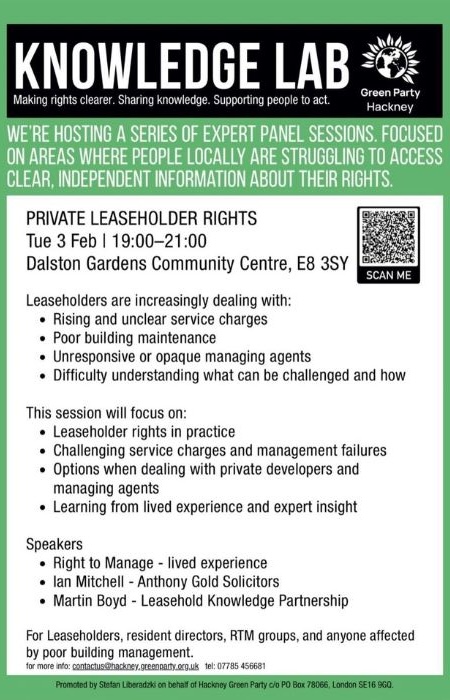
The final speaker was Martin from the Leasehold Knowledge Partnership.
He went on to explain the details of the “Leasehold and Freehold Reform Act 2024” in greater depth.
Previously, even when leaseholders won their case at the First-tier Tribunal, they could not recover their legal fees. On top of that, freeholders were often able to add their own legal costs to the service charge, leaving leaseholders at a clear disadvantage.
Under the 2024 Act, however, freeholders will face limits on their ability to pass on legal costs. As a result, leaseholders may in future be able to recover their costs if they win their case.
I was struck by the emphasis on the fact that, in tribunal cases, you have to prove that your evidence is more reliable than the other side’s. This is why it is vital to keep collecting evidence on a day-to-day basis.
Freeholders often argue that they are professionals who are doing things properly, and that leaseholders are just overreacting because they do not fully understand complicated matters. Because tribunals sometimes accept these arguments, having strong evidence can make all the difference.
After that, the discussion moved into a Q&A session.
Thoughts after taking part
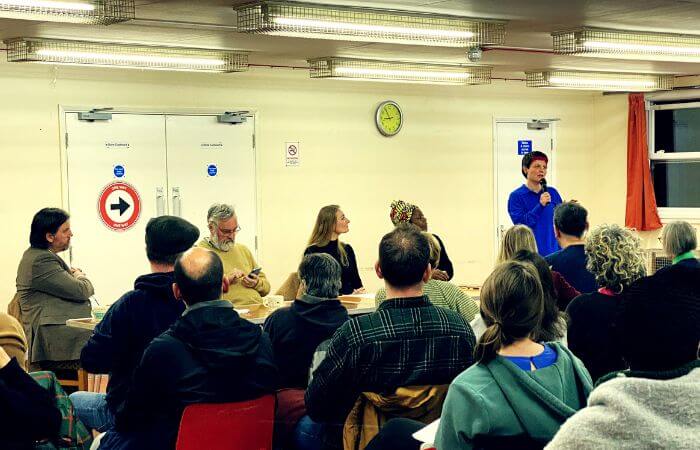
This event was organised primarily by Rachel, who is standing as a candidate in the ward elections this May in Dalston, together with Zoe, a sitting councillor. A large number of people attended, and the event was a great success.
Holding a free event like this for local residents and bringing in professionals to offer support can make a real difference for people who are struggling. It also highlighted the way Green Party members tend to act from the perspective of residents, rather than simply promoting their party.
If both of them are elected as councillors for Dalston, it would be a major gain for the local community.
Until next time,
konkaz
*You can read this blog post in Japanese from the link below.
👉 Hackneyのリースホルダー問題とは?Dalstonで行われたKnowledge Hubイベントをレポート