
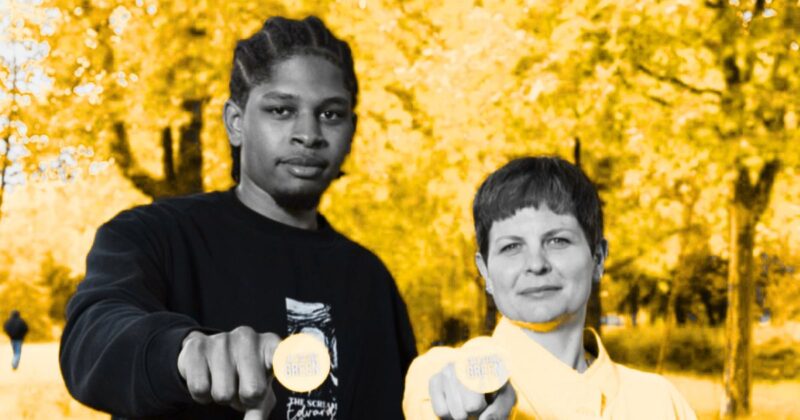
Hi! It’s konkaz (@konkazuk).
Well… we finally did it.
I’m genuinely really happy about this.
Local elections were held across England on 7th May, and here in Hackney, the borough of London where I live, Green Party candidates won a majority of seats and even took control of the mayoralty from Labour in what many are calling a historic victory.
Honestly, this feels massive!
So in this article, I’d like to take a closer look at the local elections in Hackney.
Election Day Report
Door-to-Door Canvassing
For over a year, we’d been knocking on doors or delivering leaflets week after week.
Election Day itself felt like the culmination of all those efforts.
And no matter how much local residents support the Green Party, it means very little unless people actually go to the polling station and cast their vote on the day.
So on Election Day, it was mainly about revisiting households we had identified over time as Green Party supporters — or voters who seemed broadly sympathetic to the Greens — and reminding them directly…
“Today’s the big day. Your vote really matters, so please make sure to get out and vote.”
In London, especially in Hackney, Labour has held an overwhelming majority of seats for decades.
And because of that, there sometimes seemed to be an atmosphere that winning those seats was almost taken for granted.
In fact, I only started seeing Labour activists doing door-to-door canvassing around two weeks before Election Day, which honestly gave me the impression that there was a certain level of complacency there as well.
On the other hand, despite sensing a clear expansion of local support for the Greens, the party had historically remained a political minority in terms of seat numbers.
So even if many members felt that we had done everything we possibly could, there was still an underlying sense of anxiety and uncertainty.
I think that was how a lot of members honestly felt.
verification
After a long day of knocking on doors from morning until night, I headed to the town hall with my ID card, after the organiser for my local ward had asked me to take part in the verification process.
The verification process that takes place after local elections in the UK is something that is not commonly seen in Japan.
Put simply…
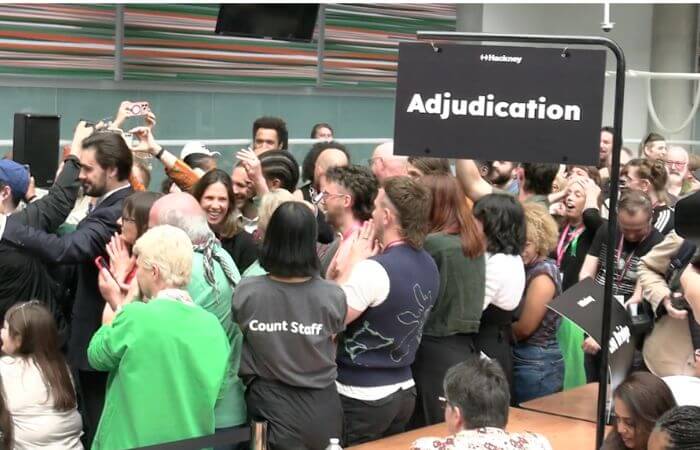
it’s a process where ballot boxes are opened in the presence of candidates or their representatives from each party. The ballot papers are then sorted in large batches by council staff, while party observers watch closely and record the numbers as they are counted.
It’s not exactly the role of an “auditor” in a strict sense, but more like an observer whose job is to help ensure that the election process remains transparent.
There are not that many participants compared to the number of staff involved. On top of that, the process moves at an incredible speed, so it is practically impossible to keep track of the exact vote counts.
Even so, you can still get a rough sense of how each party is performing in each ward, and the overall direction of the results.
When I arrived at the venue, almost everyone there apart from me was either a candidate themselves or someone who had been active in the Green Party for many years. As a complete beginner, I have to admit I felt quite nervous and out of place.
The verification didn’t finish until just before 3 a.m.
I must have been so tired that, even though it was Friday and the kids didn’t need packed lunches the next day, I still ended up making lunch as usual.
A Historic Victory
First, it is worth noting that in Hackney, Labour has been in power since 1971 — a period of more than 55 years.
Before the election, the composition of Hackney Council was as follows: out of a total of 57 seats…
| Political Party | Number of Seats |
| Labour | 43 |
| Conservative | 6 |
| Green Party | 4 |
| Hackney Independent Socialist Collective | 3 |
| Independent | 1 |
And of course, the mayor was Labour too.
That had been the political reality in Hackney for decades. However, around midday on the day after the election, the first major result began to emerge…
Zoë Garbett elected mayor!!!
At that moment, it genuinely felt like the beginning of a new chapter in Hackney politics.

Come to think of it, looking at the state of the world right now, I can’t help feeling that if someone like Zoë Garbett hadn’t been elected at this moment, then perhaps there really wouldn’t have been much hope left at all.
As the afternoon went on, the results for the councillor seats gradually started coming in.
At first, the expectation was that even 15 seats would have been considered a huge success. But in the run-up to the election, there were also expectations that things might go well enough to reach around 30 seats… possibly even close to a majority.
But when the final result came in…
an incredible 42 seats!!!
Hackney had suddenly turned Green almost overnight. The results were as follows.
| Political Party | Number of Seats |
| Green Party | 42 |
| Labour | 9 |
| Conservative | 6 |
Incidentally, Hackney Downs ward, where I live, has three council seats, and all three candidates, Alastair Binnie-Lubock, Laura-Louise Fairly, and Dylan Law, were successfully elected.
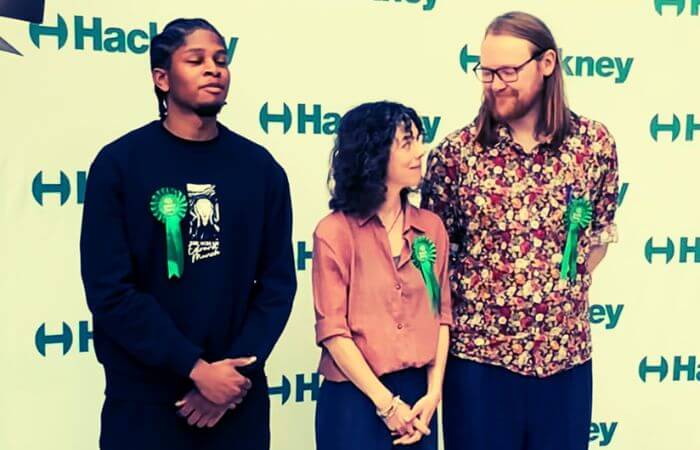
In particular, Dylan Law — who had only just turned 20 — was expected to be appointed Deputy Mayor if Zoë Garbett won the mayoralty, so it really could not have been a better result.
The only disappointing result was in Homerton ward, where the Hackney Independent Socialist Collective, which works closely with the Green Party, lost its seat to Labour.
However, despite belonging to different political organisations, the two groups share very similar political goals, and it is expected that they will continue collaborating in the future.
What a Green Mayor Means
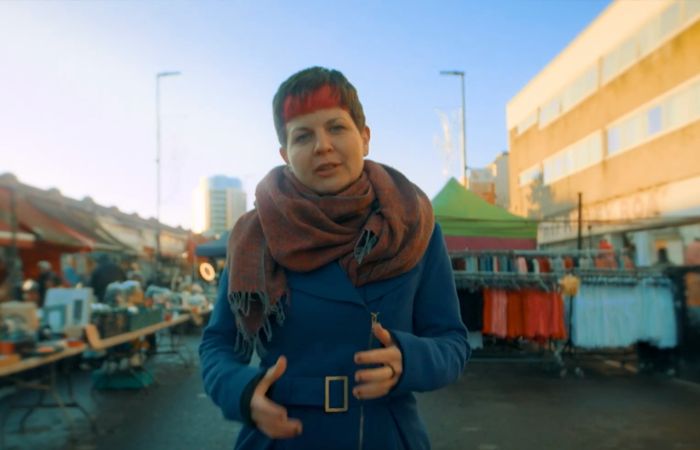
Having a Green Party mayor in Hackney means moving from being the side that simply proposes ideas to the side that actually makes decisions.
It places them in a position to lead the overall direction of the council: deciding what the main priorities should be, how budgets are allocated, and which policies the council chooses to focus on.
Up until now, the Green Party had mainly been in the position of demanding things from the outside:
“We need stronger climate policies!”
“We need more genuinely affordable housing!”
“We should be investing more in public services!”
“Stop pension funds investing in companies supplying weapons to Israel!”
That was the kind of role the Greens had traditionally played.
However, becoming mayor means taking on the responsibility of governing — actually operating the local authority and putting policies into action.
For example, this could mean giving greater priority, in terms of both staffing and budget, to areas such as:
▪️ safer infrastructure for cyclists
▪️ tackling air pollution
▪️ council housing
▪️ protecting green spaces
▪️ public transport policy
▪️ and community-led renewable energy projects involving local residents and organisations
It also means having the power to form a cabinet, appoint senior members, and set the overall direction of the administration — in other words, the ability to reshape the priorities and political atmosphere of the council itself.
Zoë Garbett had already gained a certain level of media attention through her role as a member of the London Assembly, but this election result could push her much further into the public spotlight.
And if her influence within local government continues to grow, there is the possibility that she could begin influencing other councils and even national politics.
That said, turning all of this into reality comes with a number of significant constraints: local authority budgets, relations with central government, cooperation with Labour councillors, and coordination with the bureaucracy — all of which limit what can be achieved in practice.
And yet, given just how many Green Party councillors have now been elected, it is hard not to feel that someone with her energy, determination, and ability might just be able to make it work.
My Reflections on This Election
In this local election, the Green Party achieved a dramatic breakthrough in the London Borough of Waltham Forest, next to Hackney, going from no representation at all to 31 councillors.
In the London Borough of Lewisham in South London, the Greens also secured the mayoralty, while in Wales the party won its first-ever council seats — a clear sign of growing momentum for the Greens across the country.
This suggests that many voters who are unhappy with the current political system — yet who have traditionally voted Labour or Conservative — are starting to break away from that long-established two-party framework.
In other words, it also reflects a growing sense of urgency and concern among the public.
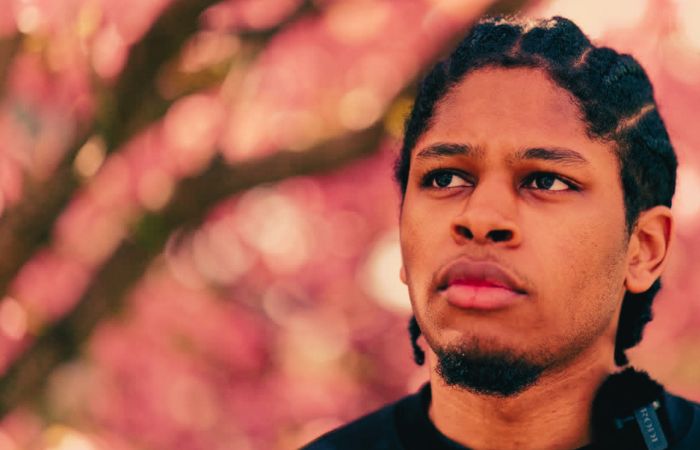
From the perspective of climate change, one of the individuals who may play an important role in shaping Hackney’s future is Dylan Law, who was appointed Deputy Mayor at the age of just 20.
He appears to be a person of strong conviction and a calm, composed character.
It is younger generations who perhaps feel the reality of the climate crisis most acutely. Dylan Law’s responsibilities are likely to focus mainly on housing policy and improvements to the education system, but his future work is expected to have a strong impact on people of his own generation.
This, in turn, could encourage more young people to engage in politics, push back against the rise of far-right movements, and help build a faster, more internationally connected climate action movement based in London.
And so, I’d like to extend my sincere congratulations to everyone who has been elected — truly well deserved.
konkaz
*You can read this blog post in Japanese from the link below.
👉 イギリス地方選挙でグリーン党が歴史的大勝利 ─ ロンドン・ハックニーで起きた政治変化とは