

Hi! It’s konkaz (@konkazuk).
People often say that we need to cut CO₂ emissions, but is there actually a specific limit to how much CO₂ can be emitted?
In recent years, climate scientists have begun describing the Earth as having a kind of “invisible budget”.
However, much of that budget has already been spent through the cumulative CO₂ emissions produced by humanity since the Industrial Revolution, leaving only a small amount of room to keep global warming within 1.5°C.
This is the very budget that scientists call the carbon budget.
So, let’s take a closer look at what the carbon budget is and how it works.
What Is the Carbon Budget?
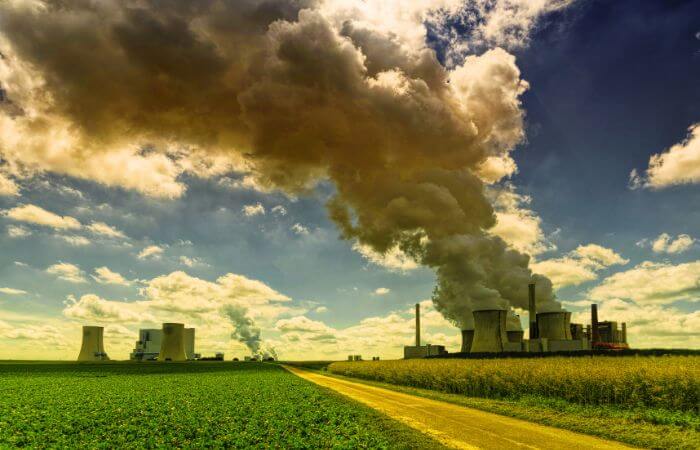
As mentioned in the introduction, the carbon budget can be defined as…
the remaining amount of CO₂ that humanity can emit if global warming is to be kept within a certain range.
This concept is important because, just like a financial budget, there is a limit to how much can be used.
For example, households have a limited amount of money they can spend each month. If they spend too much, they will eventually run out of money.
The same applies to the carbon budget. The more CO₂ we emit, the less room remains to keep global warming within a safe range.
In other words, CO₂ emissions are not unlimited. The more we emit, the more we reduce the remaining “budget” available for the future.
So how much of the budget is left?
According to the latest research, the remaining carbon budget consistent with the 1.5°C target is estimated to be around 100–200 gigatonnes of CO₂ globally, although this varies depending on assumptions. (While 100–200 Gt CO₂ may sound large, humanity currently emits about 40 Gt CO₂ per year. 1Gt = 1billion tonnes.)
Put simply, what remains is roughly equivalent to just 2–5 years of global emissions.
On the other hand, recent observations show that global average temperatures have already temporarily exceeded 1.5°C in some years.
However, the “1.5°C target” set in the Paris Agreement is based on long-term average temperatures rather than individual years. This means that the goal has not yet been immediately lost.
The real concern is that if CO₂ emissions continue at the current pace, these temporary exceedances could become the norm—and eventually push long-term average temperatures beyond the 1.5°C threshold as well.
The Roots of the Carbon Budget Debate

The carbon budget is generally understood as a scientific estimate of the remaining amount of CO₂ that can be emitted. However, in reality, it is a much more complex issue, deeply connected to international politics.
This is because there is no clear answer to the question of who should be allowed to use how much of this remaining “budget”.
■ The Historical Responsibility of Developed Countries
Developed countries became wealthy while relying heavily on fossil fuels for more than a century. Much of today’s prosperity and high quality of life was built during that period.
This has led to the argument that countries that contributed more to the problem through their past emissions should take on a larger share of the responsibility for solving it.
■ The Right to Development for Developing Countries
Meanwhile, countries such as India are still working to grow their economies and improve the lives of their citizens. To achieve those goals, energy consumption remains indispensable.
This creates a difficult dilemma: balancing the right to continue developing with the responsibility to curb emissions in the fight against climate change.
■ Major Nations and the Carbon Budget
The decisions made by major emitters such as China, the United States, the EU, and India have a major influence on the world’s remaining carbon budget.
The challenge is that each country has a different level of economic development and a different energy mix, making it difficult to agree on who should bear how much of the burden of reducing emissions.
■ The Question of Fairness
All of this leads to a fundamental question of fairness: how much responsibility should each country bear?
The answer depends on how the issue is viewed. Should countries that emitted the most in the past be held more accountable, or should greater attention be paid to current emissions and future development needs?
Depending on which perspective is adopted, the responsibilities assigned to each country can look very different.
Put simply, the carbon budget is not just about calculating how much CO₂ can still be emitted, but also a highly practical political issue concerning how the world’s limited carbon budget should be shared among countries.
What Is Needed to Achieve Net Zero

Faced with the limited remaining carbon budget, the world has set has set a goal of net zero CO₂ emissions.
However, achieving this goal will require a major shift across society as a whole.
The core of this transition is the shift from fossil fuels to renewable energy, as well as the electrification of transport and housing. In addition, structural changes in buildings and industry are essential.
This includes designing buildings that maintain comfort with less energy, and decarbonising key sectors such as steel and cement production.
Furthermore, economic systems themselves must adapt to decarbonisation through mechanisms such as carbon pricing.
However, this challenge cannot be solved by developed countries alone. International cooperation is essential to ensure emissions are reduced without hindering the economic growth of emerging and developing countries.
Therefore, net zero is not something that can be achieved through technology alone. It is an effort that requires transforming the entire structure of society.
In this article, we have explored the basics of the carbon budget, the global disagreements it raises, and the challenges of achieving net zero.
This is an issue that will become increasingly important for our societies in the years ahead, and one that we should keep in mind.
Until next time,
konkaz
*You can read this blog post in Japanese from the link below.
👉 カーボンバジェットをめぐる国際対立とは?背景と公平性の問題