
Hi! It’s konkaz (@konkazuk).
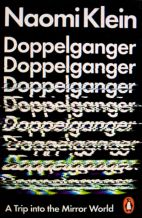
The book I’m introducing today is ‘Doppelganger’ by Naomi Klein, a writer, political commentator, journalist, and environmental activist who continues to speak out on issues such as the climate crisis and human rights violations around the world.
When I was younger, I remember often hearing people say, “Try to look at the bright side of things”, but more recently, I’ve started to think that there may be another side to this way of thinking.
As the idea of “positive thinking” spread, the belief that we should stay positive and move forward, rather than focus on unhappy events or realities that are difficult to accept, became deeply embedded in modern society.
As a result, I feel that many people have become less willing to face social problems directly. Instead, they think, “Someone else will solve them,” and simply focus on moving their own lives forward.
But at the same time, I began to wonder if there might be another side to things. What is inconvenient or harmful to us may sometimes benefit someone on the other side.
While we look away from realities we would rather not face, the “other side” continues to accumulate wealth and power and expand its influence. Meanwhile, we become more focused on our own individual goals and gradually lose our sense of connection as a community. Without realising it, we become more vulnerable.
And without even noticing that our own “bright side” is slowly shrinking, we become increasingly vulnerable to the growing power of the “other side”. Even when we are being deceived or manipulated, we are no longer in a position to respond effectively.
This book is a work of non-fiction that explores the nature of modern society and politics from a psychological perspective.
Honestly, it is one of the most moving books I have ever read, and at the same time, one of the books that has made me think most deeply about the world around me.
I really hope that as many people as possible will read it.
The Other Naomi

When you search for “Naomi Klein” online, you may also come across another person with the same first name… “Naomi Wolf”.
What makes this even more confusing is that Naomi Wolf is also a prominent female writer who, like the author of this book, has written and spoken extensively about politics and society…
However, their political views and ideas are very different.
On the internet, the two Naomis are constantly being confused with one another. Statements that are believed to have been made by the author, Naomi Klein, may actually have come from Naomi Wolf, and vice versa.
And as this confusion is repeated over and over, algorithms can gradually reinforce it and make it seem like an established fact. Before long, you can end up being seen as someone who expresses views completely different from your own, and as someone who holds political beliefs that you would never actually support.
Naomi Wolf, who often spreads opinions based on personal feelings and speculation, is almost the complete opposite of the author, who takes great care to research her claims and verify the evidence before publishing them as a journalist.
That is why this situation on the internet, where she cannot decide for herself how others see her, is deeply troubling and hurtful for her.
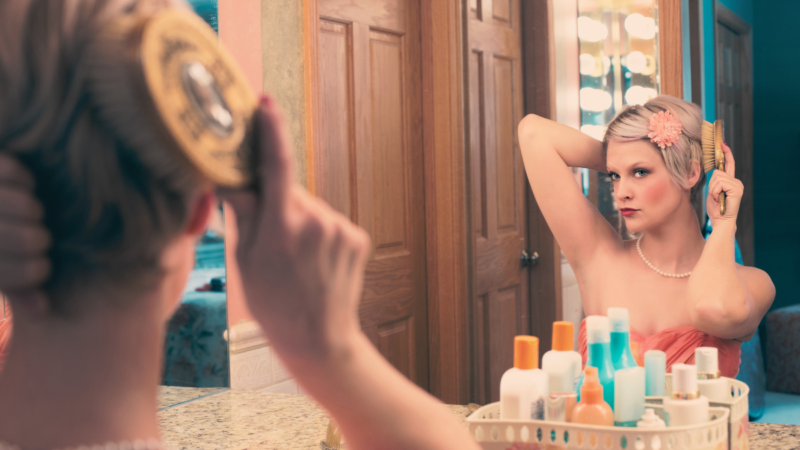
And the relationship between the two is almost like the worlds on opposite sides of a mirror.
But this is not just a story about the relationship between the author and the other Naomi. As she explores modern society and events throughout history, she begins to reveal how many things in the world actually have two sides, much like the “front” and “back” of a mirror.
In today’s society, misunderstandings and confusion that arise online can be repeated so many times that they begin to feel like reality. Before they know it, people who were once on the front side of the mirror can move to the other side without even considering whether it is actually good or bad for them.
This is the dangerous situation we find ourselves in.
The World of Conspiracy Theories

I think we all have this tendency, but when something happens that is complex and hard to understand, we naturally try to find some meaning or pattern behind it.
We may then start wondering whether the event was really just the result of chance and several factors coming together, or whether…
“Could someone actually have made it happen?”
This kind of thought can begin to enter our mind.
And this is where the idea known as
“conspiracy theory”
starts to emerge.
And what makes this even more complicated is that, in a modern society increasingly shaped by individualism, many people have a strong desire to feel that they are “someone who matters” and to get attention from others.
When someone comes up with a conspiracy theory and shares it with people who have similar frustrations and distrust towards society, many can be drawn into the idea because it offers a simple and easy-to-understand story to explain a complex reality that is difficult to make sense of.
As more people believe and share it, misinformation and disinformation spread even further. This can then create confusion in society and draw people’s attention towards these issues.
As a result, this kind of information can take up so much space that there is less room to discuss the issues that truly matter to our lives and the future of humanity.
Once known as a prominent feminist writer, Naomi Wolf began using her own platforms to actively spread unsubstantiated or misleading claims about vaccines during the COVID-19 pandemic.
As the author describes in the book, Wolf also became connected with people spreading conspiracy theories about vaccines and increasingly came to oppose COVID-19 vaccines and public health measures.
The problem was that, from this point on, vaccination became more than simply a matter of medicine or public health.
For example, regarding vaccine passports, Naomi Wolf warned that they could become a system for monitoring and controlling people’s behaviour, eventually leading to something like a Chinese-style social credit system.
These claims then developed into an even stronger argument: that vaccine passports could become “a system to enslave ordinary people forever”.
In this way, vaccination and vaccine passports increasingly became part of a much larger narrative, in which governments, pharmaceutical companies, international organisations and the media were portrayed as working together to take away people’s freedom and ultimately lead society towards authoritarian rule.
As this narrative developed, opposing vaccines came to be seen as more than simply opposing a particular medical policy. It was increasingly framed as standing up to those in power in order to defend freedom.
As a result, the complex issues surrounding COVID-19 were gradually replaced by a much simpler narrative: “people who are fighting to protect freedom” versus “those in power who are trying to take it away”.
It gradually turns into the belief that, “We’re not simply against policies like vaccination, mask-wearing and restrictions on our freedom. We’re standing up against the ‘tyranny’ that is trying to control humanity”!
But once things get to this point, they can have real-world consequences.
If people become increasingly distrustful of vaccines and public health, this could lead to greater concern and doubt about vaccines in general, not just COVID-19 vaccines, which have helped save many lives.
In fact, in recent years, there have been reports from around the world of vaccine-preventable diseases such as measles making a comeback as people refuse vaccination.
Of course, there are likely to be many factors behind this, but the distrust in vaccines created by the spread of misinformation has also been identified as one of them.
In other words, a movement that began as a “rebellion to protect our freedom” could, ironically, end up putting people at real risk from infectious diseases.
When people’s anxiety and anger about the real power of large corporations and political inequality are redirected towards an imagined, all-powerful enemy created by conspiracy theories, it can lead to further confusion and deepen divisions within society.
Recently, I watched The Conspiracists, a documentary about conspiracy theories by British filmmaker Liz Smith, and found it very interesting, so if you are interested, I highly recommend giving it a watch.
Those Who Cross the Left-Right Divide Diagonally (Diagonalists)

We often use terms such as “left” and “right” to describe where we stand politically.
Generally speaking, the left tends to place more emphasis on social and economic equality and reducing inequality between people, while the right tends to place more emphasis on individual freedom, tradition, the nation, and the existing social order.
Of course, reality is not quite that simple, but this is probably how we tend to picture the two sides: two opposing camps.
But what if some people cross the boundary between these two camps in ways we might not expect, rather than simply moving along a line from left to right?
This was what shocked me most when I read this book.
People who were once on the left can find themselves moving towards the opposite side of the political spectrum, driven by dissatisfaction and distrust towards society, even though the ideas they encounter there are fundamentally opposed to the political ideas they once supported.
Behind all this are real problems that exist in modern society…
▪️Wealth and power are concentrated in the hands of large corporations.
▪️Some wealthy individuals have significant influence over politics.
▪️There are various vested interests connecting the media with corporations and financial interests.
▪️And many people feel that decisions affecting their lives are being made somewhere beyond their reach…
These are real problems that lie behind the dissatisfaction and distrust people feel towards society.
However, when another narrative enters the picture, that dissatisfaction and distrust can sometimes be directed in a completely different direction…
“What if everything is actually connected behind the scenes?”
“What if we are being deceived by some huge system without even realising it?”
When complex social problems are turned into simple stories like these and reach people on the left who are already frustrated and angry with society, some of them can find themselves drawn towards these ideas.
The desire for attention, recognition, and a sense of belonging can also play a role in why some people cross political boundaries.
We now live in a time when anyone can use social media to share their opinions and experiences directly with others.
As a result, turning yourself into a personal brand and making your voice heard by large numbers of people can itself become something of value.
For example, even in the world of health and fitness, there are people who want to attract attention and build their influence.
There is nothing wrong with that in itself. However, someone who initially talks about health and self-improvement may gradually start talking about their own distrust of the government and the media as well.
For some people, the desire to feel important and to have their voice heard can gradually turn into a desire to have a greater influence on society. As they gain attention and validation through social media, and when their opinions are welcomed by others, that space can gradually become a place where they feel they belong.
And right-wing populists such as Steve Bannon, whom the author follows throughout the book, also reach out to people who have never been associated with the right, as well as those who no longer feel that they have a place in mainstream politics.
“You’re standing up for freedom. That’s incredibly brave!”
“You see things that other people don’t. Your voice deserves to be heard by more people!”
If people who had already been questioning the government, big corporations, and political inequality were told things like this, wouldn’t they start to feel…
“Wow, I’m being welcomed here! Maybe this is where I belong.”
And the person who initially spoke out of genuine concern about real problems gradually begins to move in a different direction. Before they realise it, they find themselves using the same language to talk about society as the political forces they once criticised.
What is happening here is not simply a “shift from left to right”.
As the desire for recognition becomes stronger, people can cross political boundaries not only because of their frustration and distrust over real-world problems, but also because they are searching for a place where they can receive attention and feel that they belong.
In this way, people can start with dissatisfaction about a particular issue, cross political boundaries in unexpected ways, and gradually move into another world, so to speak, “the other side of the mirror”. This is the phenomenon that the book describes as “Diagonalism”.
The Left’s Divisions

In the previous section, we explored “Diagonalism” — how people who once stood on the left can cross political boundaries in unexpected directions, often driven by frustration and distrust towards society. But there is another problem we need to confront.
And it is this…
People on the left can end up dividing themselves rather than building their movement, simply because they focus too much on their differences with one another.
There is no doubt that important differences of opinion need to be discussed and taken seriously. However, some parts of the left have a tendency to treat even small mistakes in the use of language as major problems. By focusing more on their differences than their common ground, they can end up driving themselves apart.
This is quite different from the approach taken by some movements on the right, which are often willing to put certain differences aside and emphasise what they have in common in order to build a broader movement.
Even though we have so much in common, we focus so much on our differences that we end up pushing away people who could otherwise be working with us.
And the author argues that, from a strategic point of view, this tendency on the left is ultimately counterproductive.
Because when we shut people out or reject them, the world on “the other side of the mirror” is ready to welcome them. It praises their courage, listens to their frustrations, and offers them a place among its own.
When people who are already frustrated or distrustful of society no longer feel that they have a place on their own side, they can easily be drawn towards another community that welcomes them by saying, “We understand what you are thinking. You belong with us”.
When Everything Becomes a Joke

And the author points out another problem with the world on “the other side of the mirror.”
It is this…
When everything becomes the subject of jokes, the language we need to talk about what really matters begins to lose its power.
Over the past few decades, we have seen politicians such as Donald Trump in the US, Boris Johnson in the UK, and Vladimir Putin in Russia present themselves as “truth-tellers” — criticising European colonialism and claiming to defend the tradition of anti-fascism, while showing little concern for the lives of ordinary people.
When politicians like these take on this role, politics itself can start to look “ridiculous” in the eyes of the public.
Once a word or idea has been turned into a joke in this way, it becomes difficult to use it seriously again.
Take the term “othering”, for example. It was originally used to describe how people in positions of power portray certain groups as “different” or “inferior”, helping to justify their discrimination or exclusion.
But when figures like Steve Bannon use the term “othering” to argue that they are being discriminated against by the left and liberals, the word itself can start to sound almost like a joke.
When this happens, it can become difficult for us even to talk about the “othering” of immigrants, Black voters, and transgender and non-binary young people — the very people whose experiences the term is supposed to describe.
The same thing happened with the term ‘fake news’.
After the 2016 presidential election, Trump repeatedly described news coverage that was critical of him as “fake news”.
But the term “fake news” originally referred to deliberately fabricated stories or propaganda designed to look like real news.
However, when the term “fake news” itself starts being used as a political weapon, we can end up losing a useful way of describing the disinformation and propaganda that are actually out there.
The same is true when it comes to ‘conspiracy theories’, too.
If legitimate criticism is dismissed as a ‘conspiracy theory’, while real conspiracies and organised attempts to manipulate information are simply laughed off as ‘conspiracy theories’, we may eventually lose the words we need to make sense of what is really happening.
When everything becomes something to joke about, it becomes harder to talk seriously about what truly matters.
Fitness, Vaccines, and Fascism

There is nothing wrong with exercising to stay healthy, or with taking care of what you eat and how much you sleep.
However, the book describes how an interest in fitness, health, and self-improvement can sometimes become intertwined with political ideas.
For example, the belief that ‘I should have control over my own body’ can develop into the idea that ‘the government should not be allowed to decide what happens to my body’. As I mentioned earlier, this can eventually lead to opposition to vaccines and public health measures.
Unsubstantiated claims linking vaccines to autism, as well as ideas such as ‘If you have a strong body and immune system, you don’t need vaccines’, can also be absorbed into this broader narrative of ‘bodily freedom’.
… And what the author is concerned about is where these ideas can ultimately lead.
In fact, there is a historical connection between the pursuit of a healthy, strong body and the ideologies of fascism and eugenics.
In the United States before the Second World War, some early fitness and bodybuilding cultures became connected to eugenic ideas and were concerned with creating “better” human beings. In Nazi Germany, too, ideas about healthy bodies and a natural way of life became connected to the belief that society could produce “better” human beings.
Of course, this does not mean that modern wellness culture inevitably leads to fascism. The problem arises when the idea that “we can become healthier and become better human beings” is taken to an extreme.
You might start with the idea that “I eat healthily because I choose organic, additive-free foods”. But somewhere along the way, this can become “people who do not eat healthily are inferior”.
The same thing can happen with exercise. “I am always training, so I have a strong immune system” can gradually shift into “people with weaker immune systems are inferior”. What began as a belief in taking care of your own health can end up becoming a way of judging and looking down on other people.
The idea that “I am optimised” can, by the same logic, lead to the belief that “those who are not optimised are inferior”.
In other words, the author argues that, when we look at what has happened in the past, the personal idea of improving yourself by taking control of your own body can become linked to a political narrative. Before we realise it, it can develop into a way of thinking that divides human beings into the “better” and the “lesser”.
The “Shadow” on the Other Side of the Mirror

So far, we have explored the “other side of the mirror” through conspiracy theories, Diagonalism, the desire for recognition, division, and ideas surrounding the body and freedom. But before we finish, there is one final idea the author arrives at that is worth considering.
And it is this…
Are the people on the “other side of the mirror” really the only ones who belong “there”?
That is the question the author leaves us with.
For centuries, the doppelganger has appeared in stories as a “double” or “second self”.
But perhaps the doppelganger is not simply someone who stands in opposition to us. Perhaps it raises a more uncomfortable question, which is… “Could the desire to control or exclude others also exist within us?”
In other words, perhaps fascism and authoritarianism are not things that suddenly arrive from somewhere else. Perhaps they are also rooted in feelings that can exist in all of us… the desire to feel superior, to believe that “we are right”, and to see ourselves as “special” compared with other people.
And if those feelings are taken too far, we may begin to see anyone who is different from us as “wrong” or “lesser”.
This is also where the discussion of the “body” we have looked at so far comes back into the picture.
What begins as an attempt to optimise ourselves can, before we realise it, become a sense that “we are better people”.
And it is not just about the body. Whether in politics, society, business, or identity, we can gradually create “people who are not us” as a way of defining who “we” are.
I think this is the central issue the author is exploring throughout the book.
On the one hand, we naturally want to maintain our own sense of identity and individuality. On the other, we also have a fundamental need to connect with others and feel that we belong to a community.
But in modern society, we are increasingly encouraged to value what makes us different from everyone else, while solidarity and mutual support are given less and less importance in a society that places so much emphasis on the individual.
This is why the author argues that we cannot address the major problems facing society simply through individual self-improvement. Instead, we need to soften the boundaries we have created between ourselves and others, and come together around common goals.
Because, in the end, the “Doppelganger” on the other side of the mirror may not be so different from us after all.
Rather than thinking, “How can those people on the other side have such crazy ideas?” or “What they are doing is unbelievable if you look at it from a common-sense perspective”, we should ask ourselves whether some of the same tendencies might also exist within us.
We do not have to erase the boundaries between ourselves and others completely. But we can try to create spaces where we can look beyond our differences and work together on the problems we have in common.
When we have a falling-out with someone, the longer we stay out of contact, the more room there is for each side to imagine what the other person is thinking or feeling. Over time, this can deepen resentment and make the relationship even more difficult to repair.
It made me think about how important it is, especially today, to have a sense of community and make an active effort to get to know the people around us.
Until next time.
konkaz
*You can read this blog post in Japanese from the link below.
👉 Naomi Klein 『Doppelganger(ドッペルゲンガー)』感想・レビュー | アイデンティティと陰謀論