

Hi! It’s konkaz (@konkazuk).
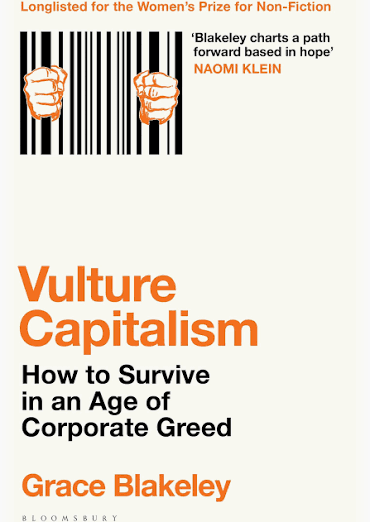
The book I’m introducing today is “Vulture Capitalism” by Grace Blakeley, a Marxist economist, political commentator, journalist, and author who has been actively speaking out about growing economic inequality in the UK.
Since the COVID-19 pandemic, the gap between rich and poor has grown even wider across the world. At the same time, right-wing populism and far-right movements have gained momentum in countries such as the United States, Italy, Hungary, Argentina, and Israel.
And here in the UK, we are increasingly seeing the consequences of these changes as well.
These days, it’s incredibly easy to scroll through social media and come across conspiracy theories, misinformation, and wild speculation. That’s why I believe reading well-researched, evidence-based books like this is more important than ever.
At a time when so many people are feeling uncertain about the future, the greatest value of this book is that it doesn’t simply describe the crises we face today. Instead, it explains the hidden story behind how we got here.
It helps us understand where we stand today and the historical path that has brought us here.
Who is Grace Blakeley?

First, a quick introduction to the author.
Grace Blakeley, who is still in her early thirties, is a democratic socialist and describes herself as a Marxist rather than an economist.
After working as a columnist for the political weekly New Statesman and other publications, she gained widespread attention with her third book, Vulture Capitalism.
In recent years, she has been speaking out about the growing severity of economic inequality. Arguing that ordinary people need to take action if we are to stop inequality from getting even worse, she continues to speak to audiences around the country to spread that message.
Below is a clip from when she appeared on PoliticsJOE.
She previously supported the Labour Party during Jeremy Corbyn’s leadership. However, in 2023, she left the party, saying she disagreed with Keir Starmer’s comments on the Gaza conflict.
She now supports the Green Party, led by Zack Polanski.
Does the Free Market Really Exist?
When people hear the word “capitalism”, one of the first things that often comes to mind is the idea of a “free market”.
This concept generally refers to …
a system in which the state intervenes as little as possible, allowing participants such as sole traders, family-run shops, small and medium-sized businesses, and large corporations to compete freely within the market.
The idea is that this kind of competition leads to better products, better services, and innovation. In the end, consumers enjoy a more comfortable and prosperous life.
Wouldn’t this be the kind of capitalism that many people tend to imagine?
In other words…
Capitalism ➡︎ Free market ➡︎ Competition ➡︎ Prosperity and freedom
However, from the 1980s onwards, under leaders such as Margaret Thatcher in the United Kingdom and Ronald Reagan in the United States, capitalist policy shifted towards neoliberalism.
As a result, this structure began to break down.
Neoliberalism refers to …
a modern policy approach that places a strong emphasis on free market competition. To achieve this, governments promote deregulation, privatisation, and institutional reforms, while at the same time limiting their direct intervention in market transactions and competition.
At first glance, neoliberalism appears to be an idea that reduces state intervention and leaves markets to operate freely.
However, according to Blakeley, the state has not actually withdrawn. Instead, its intervention has been redirected to create market conditions that benefit large corporations and financial institutions.
As a result, large companies often receive government subsidies, and during crises such as the 2008 financial crash, banks and financial institutions that took excessive risks were rescued with public money to prevent collapse.
In addition, through lobbying, corporations are able to influence politicians and policy-making, securing regulations and reforms that work in their favour.
She also quotes the American economist Thorstein Veblen in her book:
The competitive process naturally creates incentives to try to change the rules to one’s own advantage.
If that’s the case, then modern capitalism is no longer run by free market competition. Instead, it is shaped by the power of governments and large corporations. In other words, the “free and competitive market” that capitalism promised no longer really exists.
The result is something like this:
Neoliberalism ➡︎ Deregulation ➡︎ The growth of large corporations ➡︎ Market dominance ➡︎ Greater political influence
According to Blakeley, this has created a system that ultimately leads to widening economic inequality.
She also argues that the very term “free market” gives the impression that competition takes place under fair and equal rules, making the reality of the system much harder to see.
Putting Limits on the Power of Capital
Capitalism is …
a social system based on the class division between those who own the means of production and those who do not. Those without ownership must sell their labour in order to make a living.
In other words, the defining feature of capitalism is the relationship between those who own the resources and means of production needed to produce goods and services, and those who must work for them because they do not.
However, since neoliberal policies were introduced in the 1980s, companies have become increasingly focused on maximising profits and shareholder value. According to Blakeley, this has changed the way capitalism works, so that it no longer necessarily benefits society as a whole.
She points to several clear examples, including the exploitation of workers by large corporations, increasing environmental damage, and the growing concentration of market power.
🔹Workers Under Pressure: Amazon as an Example
Take Amazon, for example, one of the world’s largest platform companies.
According to the book, workers at Amazon warehouses in the UK are expected to process one package every nine seconds on average while working from 7:30 a.m. to 6:00 p.m.
The book also describes cases in which female employees were allegedly treated unfairly after taking maternity leave, as well as instances in which the company allegedly tried to prevent workers from organising and standing up for their rights.
These examples illustrate the danger of allowing the pursuit of efficiency and profit to take priority over workers’ health and rights.
🔹The Environmental Cost of Overproduction
One issue that particularly shocked me was Amazon’s problem of large-scale waste.
According to the book, Amazon is said to dispose of millions of new, unsold products every year, including items such as televisions and smartphones.

In fact, reports revealed that internal documents from an Amazon warehouse in Scotland showed that more than 120,000 items were marked for disposal in just one week. In some weeks, the number was said to have reached nearly 200,000 items.
Naturally, the process of producing, transporting, and eventually disposing of these products consumes vast amounts of energy and generates significant greenhouse gas emissions.
According to Amazon’s own figures, the company’s greenhouse gas emissions reached 71.54 million tonnes of CO₂ equivalent in 2021, an 18% increase compared with the previous year.
If Amazon were considered a country, its emissions would be comparable to those of Kenya, a nation with a population of around 53 million people.
🔹Who Controls Our Food System?
Blakeley is not only questioning how individual companies behave.
She is also highlighting the fact that, through repeated mergers and acquisitions, much of the agricultural and food system has come under the control of a handful of powerful corporations.
In essential agricultural sectors such as seeds, pesticides, and fertilizers, the market has come to be dominated by just a handful of giant corporations, including Bayer, Corteva, Syngenta, and BASF.
As a result, competition has weakened, increasing the risk that food security and farmers’ choices will be undermined.
Neoliberalism was originally supposed to promote efficiency and prosperity through free competition. In reality, however, competition has allowed giant corporations to become even bigger, creating the ironic situation in which they come to dominate the market itself.
That is why Blakeley argues that we need a system that places democratic checks on the power of giant corporations, rather than leaving the market entirely to the state or allowing corporations to do as they please.
How Shareholder Value Changed Everything

According to Blakeley, the spread of neoliberalism from the 1980s onward encouraged many companies to put shareholder returns ahead of long-term investment and the welfare of the people who work for them.
A classic example featured in the book is Ford Motor Company, the American car manufacturer.
Ford was once one of America’s leading manufacturers, employing large numbers of workers to build cars. However, Blakeley argues that in recent years its financial business has become increasingly important, and that the company’s focus has shifted from making good cars to delivering returns to shareholders. In fact, she notes that between 2012 and 2020, Ford returned 100 percent of its net profits to shareholders.
Of course, providing returns to shareholders is one of a company’s important responsibilities.
However, when it becomes the top priority, there is a risk that too little money will be invested in new equipment, research and development, and the people who work for the company.
Another example presented at the very beginning of the book is Boeing.
According to her, the company’s drive to maximize profits and boost its share price led to safety concerns being overlooked, ultimately resulting in serious accidents. Yet even after these tragedies, it is the company that is held accountable, while the executives who made the key decisions are rarely prosecuted or held personally criminally liable.
She argues that this is what truly reveals the nature of neoliberalism. It is not that the power of the state has weakened, but rather that it has come to be used to protect the interests of capitalists and corporate executives instead of those of workers.
Who Really Controls the World’s Money?

We tend to think that companies compete with one another in a free market. However, Blakeley points out that, behind the scenes, a small number of powerful asset managers have become major forces shaping the global economy.
The book highlights BlackRock as a leading example: one of the largest asset management firms in the world.
Unlike Amazon or Ford, BlackRock is not a company that provides products or services directly to consumers. Instead, it makes money by investing funds collected from pension funds and investors into companies around the world.
As a result, it is not unusual for the same asset management companies to be major shareholders in companies that appear to have nothing in common — from food companies whose products are sold in supermarkets to IT firms and pharmaceutical companies.
She challenges this reality with a question: “In a supposedly free market, how is it that the same companies have come to hold such influence over businesses around the world?”
What is even more interesting is that much of the money managed by these asset management companies actually comes from our own pension funds.
Pension funds invest money in order to pay future pensions, and they often entrust the management of those investments to companies like BlackRock.
In other words, our own retirement savings are also being grown through investments in companies around the world.
This means that asset management companies are constantly under pressure to generate high returns. She argues that, as a result, companies may become more likely to prioritize cutting labour costs and rewarding shareholders, while giving less attention to workers, local communities, and the environment.
In this way, economic power has become increasingly concentrated in the hands of a small number of powerful financial institutions. And their influence extends beyond corporate management, reaching into politics and society as a whole.
Central Banks and the Power of Financial Markets

Most ordinary people assume that governments are the ones who run countries. However, Blakeley points out that, in today’s world, the power of financial markets and giant financial institutions has grown so significant that even governments find it difficult to ignore their influence when making policy decisions.
In this sense, the power of the state has not simply declined in the neoliberal era. Rather, the influence of financial institutions and investors who move money around the world has become stronger than ever before.
One of the clearest examples of this shift is the idea of central bank independence.
In the past, politicians sometimes pressured central banks to “lower interest rates” or “print more money” because they wanted to boost the economy before elections and gain support from voters.
From the 1980s onward, the idea that “monetary policy should be managed by experts rather than politicians” became more widely accepted, and many countries moved towards granting greater independence to their central banks.
However, Blakeley points out that this arrangement may have reduced direct political influence over monetary policy, but at the same time it allowed the ideas and interests of financial markets and financial institutions to gain greater influence over economic policy.
For example, when a financial crisis occurs, central banks often give priority to rescuing banks because allowing them to fail could cause the entire economy to collapse. This can create a situation in which banks are effectively treated as “too special to fail.”
As a result, financial institutions may develop the sense that “even if they make mistakes, they will ultimately be rescued,” encouraging them to take greater risks.
As this process continues, governments increasingly make policy decisions while taking into account how financial markets will react. As a result, profits become concentrated in the financial sector, while the costs and risks are passed on to society as a whole, widening inequality.
In the end, even democratically elected governments may find their choices constrained, as they hesitate to take action for fear of triggering a backlash from financial markets.
Who Do the IMF and World Bank Really Serve?
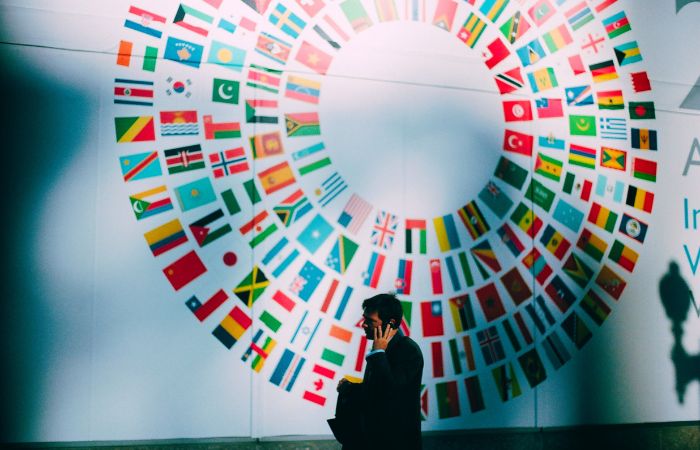
Blakeley also points out that the impact of neoliberalism extended to developing countries.
One example discussed in the book is Zambia.
Following a dramatic fall in copper prices, Zambia’s export revenues declined sharply. Then, when the United States raised interest rates substantially, the burden of servicing its dollar-denominated debt increased dramatically, placing the country under even greater financial pressure.
In the wake of this debt crisis, the World Bank and the IMF stepped in with an offer: “We’ll lend you money—but only if you agree to certain conditions.”
These conditions became known as Structural Adjustment Programs (SAPs).
The aim of SAPs was to make economies more efficient, reduce government budget deficits, and promote economic growth by attracting foreign investment.
Their policies included…
■ Cutting government spending (austerity)
■ Privatising state-owned enterprises
■ Deregulation
■ Trade liberalisation
■ Reducing subsidies
It’s a set of policies that should sound familiar by now.
As a result, government spending on education and healthcare was reduced, and living standards for ordinary people declined. Unemployment and poverty increased, while local industries struggled to compete with foreign companies. As a result, dependence on developed countries and international financial institutions deepened even further.
Through this process, foreign corporations expanded into developing countries, creating more low-paid and exploitative jobs that often involved dangerous physical labour.
Grace Blakeley’s Vision for Change

Blakeley argues that the problem is not the existence of markets themselves, but the fact that giant financial institutions and investors that move money around the world have accumulated too much power. She believes that what matters is restoring democratic rules to this system.
One of the most inspiring stories in this chapter is the “Lucas Plan”.
The book describes how, in 1970s Britain, workers at a military manufacturing company proposed producing socially useful products — such as wind turbines and medical equipment — instead of weapons.
She also points out that because the development of new technologies is largely controlled by giant corporations and a small number of wealthy individuals, these technologies are often designed with the goal of generating profits above all else.
In order to build a truly democratic society, she argues that technology should be used not for the benefit of a small group of wealthy people, but for the benefit of society as a whole.
For this reason, she argues that …
each of us needs to recognise that politics is not just about voting in elections. We need to understand that joining together with our colleagues to demand better wages, protesting against the climate crisis, and working with our neighbours to protect a local library are all forms of political participation.
Blakeley emphasises that the greatest obstacle is not the overwhelming power of a small group of wealthy elites, but the widespread belief that real change is simply impossible.
Perhaps that is why what we need most is to let go of that belief, reconnect with those around us, and, through countless small acts, rediscover the possibility that society really can be changed.
So, that’s all for today.
This book is full of the knowledge we need to understand the crises of our time and to begin thinking seriously about how to tackle growing inequality and climate change.
Every single page is dense and thought-provoking, but I genuinely believe that if more people were to read this book, we would have a much better chance of solving many of the problems humanity faces today.
Bye now,
konkaz
*You can read this blog post in Japanese from the link below.
👉 新自由主義とは何だったのか?『Vulture Capitalism』から読み解く現代資本主義の問題点