

Hi! It’s konkaz (@konkazuk).
Lately, when reading articles about US politics and society, I often come across the term “Evangelical“.
Until recently, all I really knew about the term was that it was related to Christianity. But as I continued reading, I began to wonder why it kept appearing in discussions about Trump, American conservative politics, billionaires such as Elon Musk and Peter Thiel, and even the political debate surrounding Gaza.
Around the same time, Naomi Klein and Astra Taylor released ‘END TIMES FASCISM’ (which I haven’t read yet). It made me think that I should learn a bit more about the background to all this.
So, I decided to write this article, exploring some of the questions that had been on my mind.
What does ‘Evangelical’ mean?

The term ‘Evangelical‘ refers to a religious tradition within Christianity. The word ‘Evangelical’ derives from the Greek word euangelion, meaning ‘good news’ or ‘Gospel’, which refers to the message of salvation through Jesus Christ.
At the heart of this is the belief that the Bible should serve as a foundation for both faith and daily life, and that salvation does not come from what people do or how good they are, but from God’s grace and the salvation offered through Jesus Christ.
The main traditions within Christianity include Catholicism, Protestantism and Eastern Orthodoxy.
All of these traditions place importance on Gospel, but the term ‘Evangelical’ generally refers to a religious movement or stream of thought centered mainly within Protestantism.
Evangelicalism is not unique to the United States, and Evangelicals do not necessarily share the same political views. Nevertheless, the term “Evangelical” appears repeatedly in American news.
So why is that?
One of the main reasons for this is that …
85% of White evangelical Protestant voters are closely aligned with the Republican Party and conservative politics (Pew Research, April 2024).
But I think one important point to keep in mind is that we need to separate the religious identity of Evangelicals from particular political movements.
Not everyone who believes in Christianity supports Trump, and not all Evangelicals support Cristian nationalism – the idea that America is fundamentally a Christian nation and that its politics and laws should reflect Christian values.
I think the issue is not religion itself, but rather what kinds of ideas and actions can emerge when religious beliefs become intertwined with politics, and how these can affect society.
Why do many ‘Evangelicals’ support Trump?

White Evangelicals are an essential part of understanding the political support behind Trump.
This is because their support is rooted in long-standing conflicts over values surrounding issues such as abortion, same-sex marriage, education in schools, and the role of religion in public life.
For people who hold traditional Christian values, politics is about much more than policies. It is about protecting what they believe in: their moral principles, their families, and the values they want society to uphold.
On the other hand, for Trump, evangelicals, with their strong convictions and well-organized networks, represent an important base of political support.
As a result, a mutually beneficial relationship emerges:
people who want to reflect their religious values in politics gain a political leader who represents their beliefs, while politicians gain a strong base of support to help them win elections.
Furthermore, although their objectives are not necessarily the same, conservative media outlets, political donors, and business figures such as Elon Musk, who possess enormous wealth and technological power and invest heavily in political activities, also play a role in sustaining this alliance.
In other words, evangelical support for Trump is closely tied not only to religious beliefs but also to political interests.
The destruction of Gaza and Christian End-Times theology

One aspect I am particularly interested in is the relationship between evangelical support for Trump and politics concerning Israel.
In Christianity, there is a set of beliefs known as ‘eschatology‘, which includes the following ideas:
The End of the World
The belief that the present world and its social order will come to an end, and a new era under God will begin.
The Last Judgement
The belief that God will judge humanity at the end of the world, deciding what is good and evil based on people’s actions.
The Second Coming of Christ
The belief that Jesus Christ will return to the world to fulfil God’s plan.
Among Evangelicals, there are those who see the establishment of Israel and its continued survival, as well as developments in the Middle East, as being connected to prophecies in the Bible.
There is also an ideology known as Christian Zionism.
It is a Christian belief that the land God promised to the ancestors of the Jewish people in the Bible still holds special significance for Jews today, and that the modern state of Israel should therefore be supported.
Some Christians link the biblical prophecy of the Jewish people returning to the Promised Land to the establishment of the modern state of Israel and the return of Jews to the land. They interpret these developments as part of God’s plan leading up to the Second Coming of Christ.
…I find this quite chilling.
War is a reality in which people are killed, cities are destroyed, and countless people suffer.
But if those who believe in end-times prophecies see the war (or rather, the genocide) in Palestine as part of a biblical prophecy, treating it as nothing more than another stage in the unfolding of God’s plan, I find that incredibly disturbing and deeply unsettling.
And to take a slight detour here, the Labour government in the UK, where I live, continues to send weapons to the very side carrying out this genocide.
What’s more, pensioners who are currently protesting against the genocide are being arrested and treated as terrorists.
If what some people see as “God’s plan” is influencing not only the destruction of Gaza, which is costing the lives of real people, but also the redevelopment projects being pushed forward by politicians and businesses, then it all feels incredibly dark. It leaves me with a bleak sense of what the future might hold.
When “God’s plan” enters politics
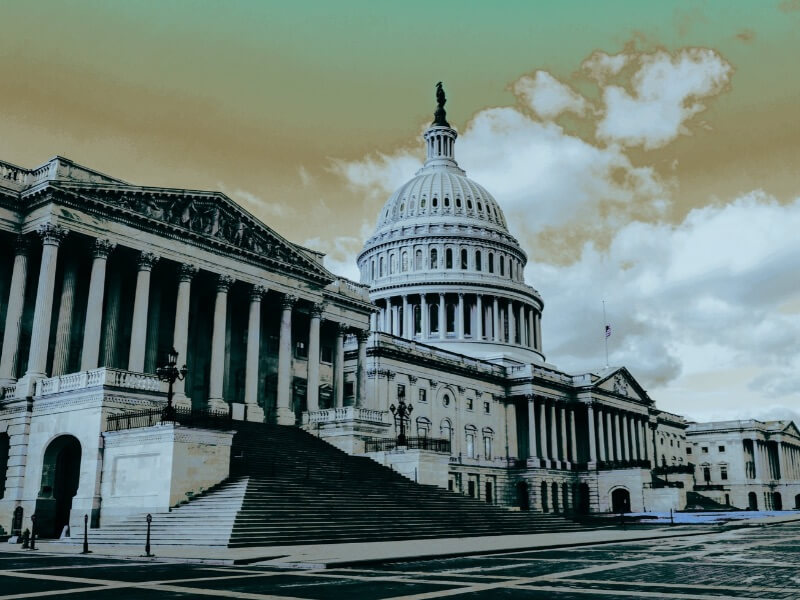
As we have explored so far, the interest in eschatology among some Evangelicals goes beyond simply asking the religious question of “When will the world end?”
When these beliefs become connected to politics, they can also influence real-world political views, such as how society should be changed and what kind of nation a country should be.
In fact, in February 2025, Trump established what is known as the White House Faith Office through an executive order and appointed an Evangelical pastor as a senior adviser.
This means that Evangelical religious leaders are not simply supporting the President from the outside; they are also taking on official roles within the administration.
When politics becomes intertwined with Christian nationalism in this way, a movement can emerge that seeks to shape politics and society around the idea that Christian values represent what America should be as a nation.
If people believe that only their own values are right and try to impose them on society as a whole, the rights and freedoms of people who follow other religions, have no religious beliefs, or choose different ways of life can be threatened.
And furthermore, it’s not as if the United States only began disregarding the rights and dignity of others when Christian nationalism gained political influence.
Despite the fact that the United States has long claimed to stand for freedom and democracy, the country has a long history of taking land from Indigenous peoples, practising slavery, exercising colonial rule over the Philippines, fighting the Vietnam War, and intervening in Central and South America and the Middle East. Throughout this history, it has often prioritised its own interests and ideals at the expense of other people’s lives and freedoms.
In other words, the attitude that other people’s suffering is an acceptable price to pay for achieving what you believe is right has been part of America’s history for a long time.
For this reason, I don’t think we can discuss Christian nationalism without taking this historical background of the United States into account.
At a time when some people believe that the world is approaching its end, there are others who hold immense financial resources and technological power that could potentially bring about such a reality.
In a world like this, what on earth should we be doing?
Until next time,
konkaz
*You can read this blog post in Japanese from the link below.
👉 Evangelical(福音派)とは?トランプ支持とキリスト教の終末論が政治に与える影響